It leaves the legal definition
The law defines an e-scooter as a vehicle whose speed reaches at most 25 km/h. A scooter with the limit removed no longer fits that definition, and its status on the road becomes unclear.
Besides the storage the site needs to work, we use Google Analytics cookies to measure how the site is used. If you choose “OK”, we also use Google Ads advertising cookies to measure our ad campaigns. These services are provided by Google LLC (USA), and the data is processed outside Türkiye. You can switch analytics and advertising cookies off in “Preferences” at any time; the site works just the same. Cookie Policy
Ad measurement runs through Google Analytics, so this can only be chosen together with analytics cookies.
Reported a fault from this device? Track Repair
Guide · Safe riding
Turkish law defines an e-scooter as a vehicle whose speed reaches at most 25 km/h. We don't lift that limit with software or hardware. This page explains why, and sets out the riding rules with their official sources.
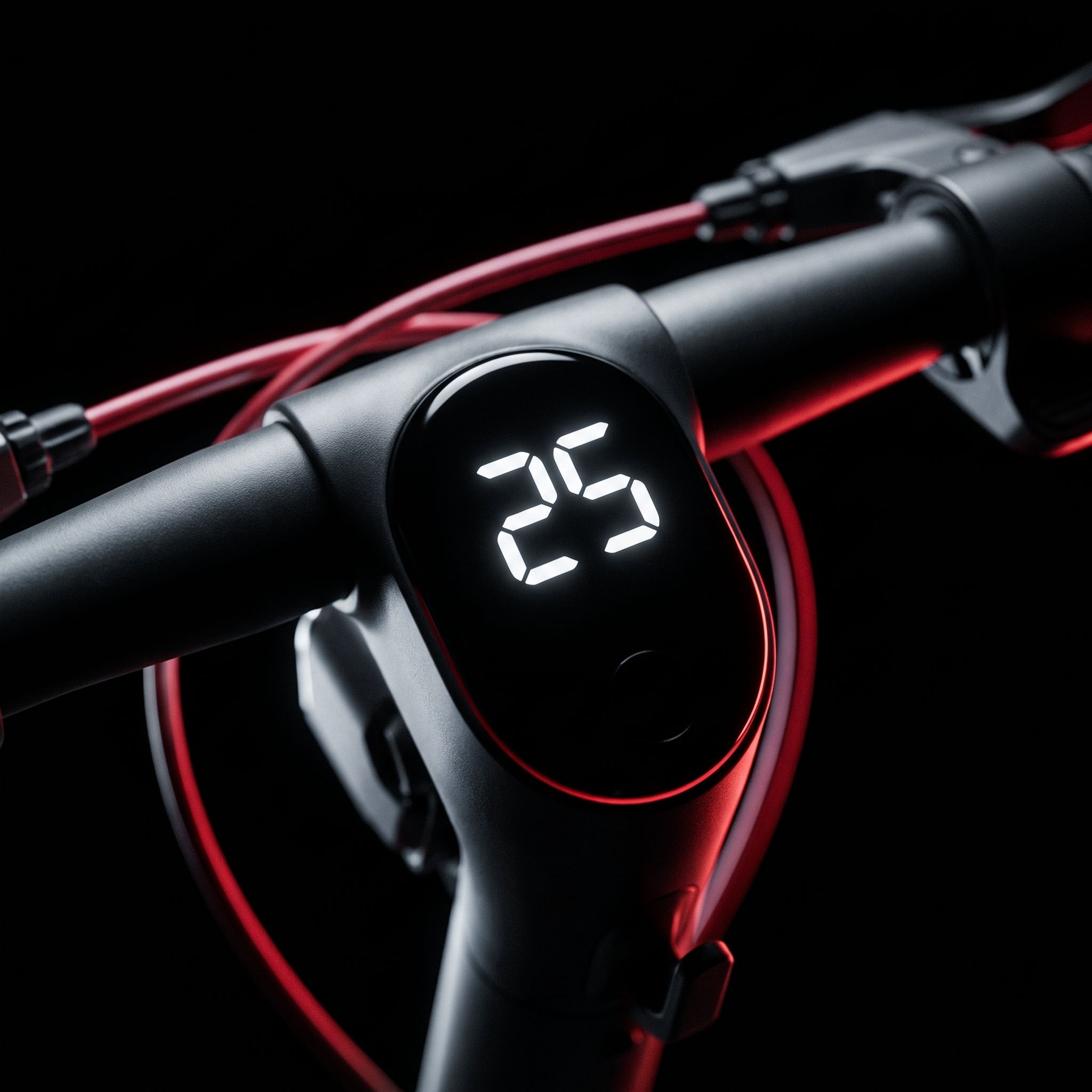
25 km/h
Maximum speed in the legal e-scooter definition
Law No. 2918, Art. 3
15
Minimum rider age on roads and in public places
Law No. 2918, Art. 37
5,000 TL
Administrative fine for breaking the riding rules (2026)
Law No. 2918, Art. 66
Changing the software to lift the limit can take a few minutes. The consequences stay with you much longer.
The law defines an e-scooter as a vehicle whose speed reaches at most 25 km/h. A scooter with the limit removed no longer fits that definition, and its status on the road becomes unclear.
Braking distance grows with the square of speed. Brakes, tyres, suspension, battery and motor controller are chosen for the speed and load the scooter was designed for; more speed pushes all of them past their design limits.
The warranty terms in Segway's user manual exclude modifications to the product and work by unauthorized service providers. Faults on a scooter with modified software may be assessed as out of warranty.
These rules apply to everyone riding their own scooter, not only to shared scooters. They apply on roads and in other places open to the public (Law No. 2918, Art. 2).
Do
Don't
Headlight
A headlight that gives white light and lights the road at least 20 metres ahead.
Part pageRed rear light
A lamp at the rear that gives red light.
Part pageRed reflector
A red reflector at the rear.
Part pageBell or horn
A bell or horn that can be heard from 30 metres.
If your headlight, rear light or reflector doesn't work or is broken, mention it in your fault report and we will check it.
Age: anyone riding an e-scooter on roads and in other public places must have turned 15 (Law No. 2918, Arts. 2 and 37). If the rule is broken, the fine goes to whoever let a child under 15 ride (1,246 TL in 2026). The legal definition does not set kids’ models apart, and scooters sold as toys must by law carry the warning “Not to be used in traffic”. So we recommend letting children ride kids’ models only on private ground closed to traffic and to the public, under adult supervision and with protective gear.
Helmet and vest: the helmet duty in Art. 150 of the Highway Traffic Regulation does not cover e-scooters; we still recommend a helmet and protective gear. At night, however, you must wear a reflective vest or similar (Highway Traffic Regulation, Schedule 1).
Fines: riders who break the riding rules in Art. 66 of Law No. 2918 face an administrative fine of 5,000 TL (Law No. 7574; Official Gazette, 27 February 2026). Amounts rise every January by the revaluation rate (Law No. 2918, Additional Art. 3); the figures on this page are for 2026.
This page summarises the law and is not legal advice. See the official sources for the current text.
A loss of speed or range can come from the battery, tyres or brakes. Start with an online fault report, and a technician will review it and tell you the next step.
Automatic replies · 24/7